
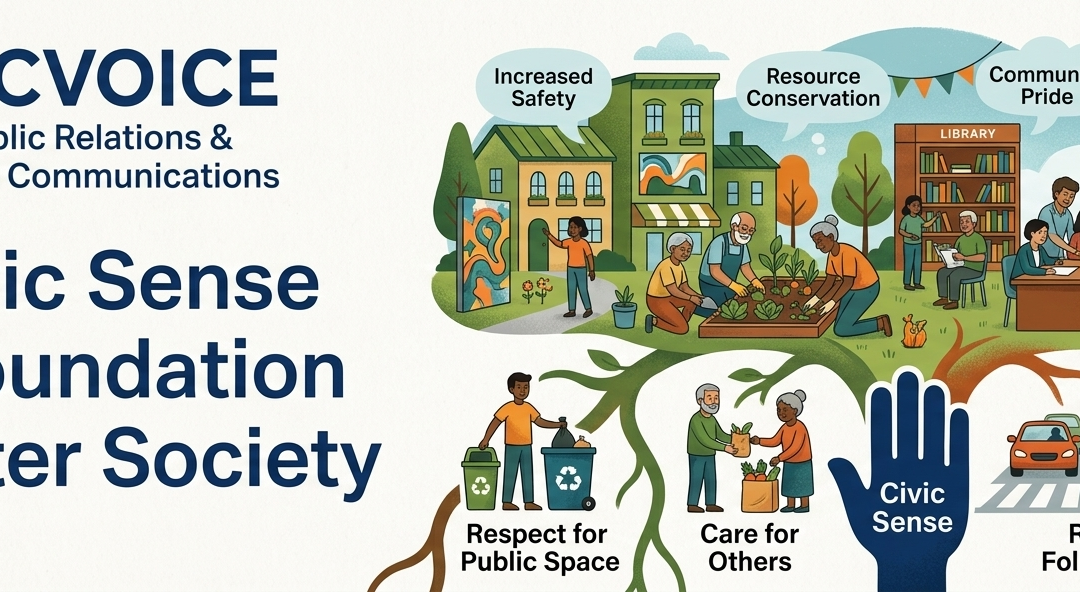
In a rapidly growing country like India, development is often measured through infrastructure, technology, and economic growth. However, one crucial factor that is frequently overlooked is civic sense—the basic responsibility of citizens toward maintaining public order, cleanliness, and mutual respect.
Civic sense is not just about following rules; it reflects the mindset of a society. Simple actions like not littering, respecting traffic rules, standing in queues, and treating public property responsibly contribute significantly to a nation’s progress.
The Everyday Impact of Civic Behavior
We often encounter situations where public spaces are misused—garbage thrown on roads, walls defaced with posters, or traffic rules ignored. These actions may seem minor individually, but collectively they create chaos, inefficiency, and a poor quality of life.
On the other hand, cities that demonstrate strong civic sense tend to be cleaner, safer, and more organized. This not only improves living conditions but also attracts tourism and investment.
The Role of Awareness and Education
Civic sense must be nurtured from an early age. Schools, families, and media play a vital role in shaping responsible citizens. Awareness campaigns, community initiatives, and local leadership can help instill habits that last a lifetime.
A Collective Responsibility
Improving civic sense is not solely the government’s responsibility—it requires participation from every individual. Change begins with small actions: using dustbins, following traffic signals, conserving public resources, and being mindful of others.
Conclusion
A nation’s strength lies not only in its policies but also in the behavior of its people. Civic sense is the foundation upon which a truly developed and harmonious society is built. When citizens take responsibility, real change becomes possible.